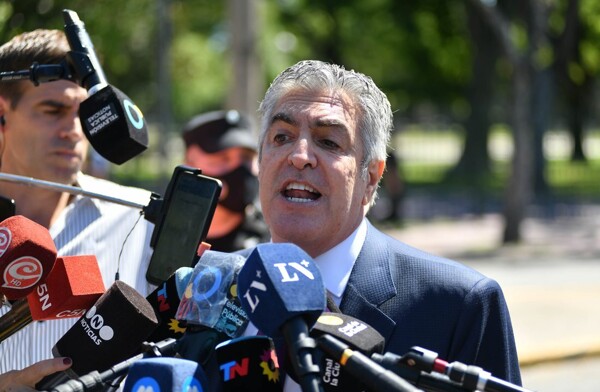
The judge considered the defense's motion “inadmissible” and confirmed that the investigation must proceed. This case strikes directly at the heart of Argentine football's power and once again exposes a leadership logic that was thought to be untouchable. The case is based on a complaint from the Customs Revenue and Control Agency (ARCA, former AFIP) regarding withholdings that, according to the investigation's hypothesis, were deducted but not deposited in a timely manner with the state. The decision to halt football—in a country where the sports calendar is part of the social pulse—was seen as a power play, but also as an admission of weakness: when a leadership is truly solid, it faces the justice system with paperwork, not with strikes. For the court, however, the issue is neither ideological nor sporting: it is criminal. For years, the AFA's structure functioned like a small state with its own rules, strong internal discipline, and the ability to exert external pressure. The message is clear: the case will not be paralyzed, and the judicial agenda is not negotiable under public pressure. The AFA's reaction, however, was political and corporate: the body decided to suspend the 9th round of the local tournament as a measure of force, presenting the case as an “attack” and suggesting a deeper intention linked to the discussion on Sports Public Limited Companies (SAD). In real Argentina, the one that pays contributions, taxes, and fees every month, the argument of “we are a civil association” does not allow one to keep other people's money or speculate with time. The case also inevitably opens a discussion about the power model in Argentine football. The core of the case, according to the complaint, does not depend on whether a civil association has benefits or moratoriums, but on whether it withheld third-party funds and did not deposit them. It is also an institutional test for the AFA: if its leadership wants to maintain a discourse of legality and autonomy, it cannot do so at the expense of funds that belong to workers and the tax system. In this direction, reports incorporated into the case describe how, while the tax liability grew, the AFA showed large income during 2025 and may have constituted significant financial placements, including fixed-term deposits in pesos and dollars. In Tapia's case, the Justice system had previously authorized a brief trip abroad under specific conditions and the payment of a bond, which served as a signal that the court is willing to grant specific exceptions but not to lose control of the process. For the court, if those amounts were withheld and not deposited within the legal timeframe, the criminal framework becomes inevitable. In the resolution that now definitively sends the case through the courts, Judge Amarante stated that the defense's attempt to nullify the interrogation is not enough to deactivate an investigation that, at this stage, already has substantial evidence. For something more basic: to explain why, according to the accusation, contributions and taxes amounting to billions were withheld without being deposited on time, and what decisions were made with those funds while the system continued to function as if nothing. In its description, the reports reached the president Tapia and the treasurer Pablo Toviggino, with spreadsheets reflecting the accumulation of unpaid obligations. The investigation aims to determine specific responsibilities within the structure: who knew, who authorized, who executed, and who benefited from the administration of withheld funds. As a precautionary measure, the ban on leaving the country for the accused remains in place. The debate is not about “whether the government wants it,” but whether there was a criminally relevant conduct in letting deadlines expire and withholding contributions and taxes. Even if part of the amount was regularized or an attempt was made to channel it through payment plans, the question the Justice system seeks to answer is earlier and more serious: what was done with the money during the time it was improperly withheld, and if it was used to obtain financial gain to the detriment of legal obligations. The defense's attempt to frame the conflict as political persecution also encounters a logical obstacle: the mechanism under investigation has dates, deadlines, receipts, and traceability. The case contemplates the figure of “misappropriation of taxes” and contributions, a crime that can carry prison sentences and places the AFA's leadership in a scenario that cannot be resolved with a press conference or an institutional communiqué. What aggravates the picture, according to the court's analysis, is the suspicion that the lack of payment was not tied to a real economic crisis, but to a conscious decision to manage those funds for one's own benefit, a practice that is often described in jargon as “making the money work.”